
- 05.15.13
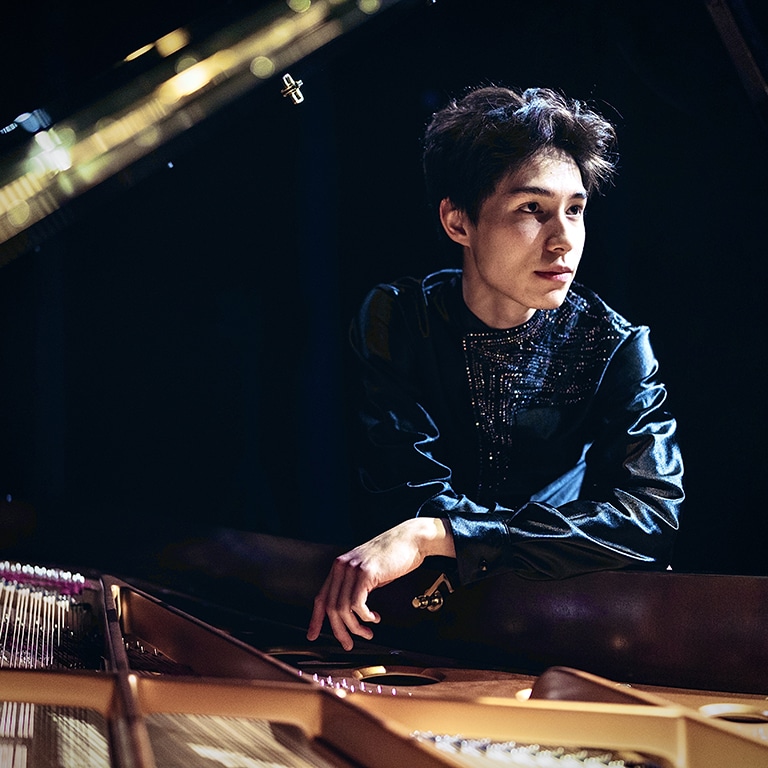
Denis Kozhukhin - Denis Kozhukhin Impresses in Prokofiev’s ‘War Sonatas’
Seen and Heard International - 05.15.13
Kuok-Wai Lio - KUOK-WAI LIO RECEIVES AVERY FISHER CAREER GRANT
Avery Fisher Artist Program - 05.14.13
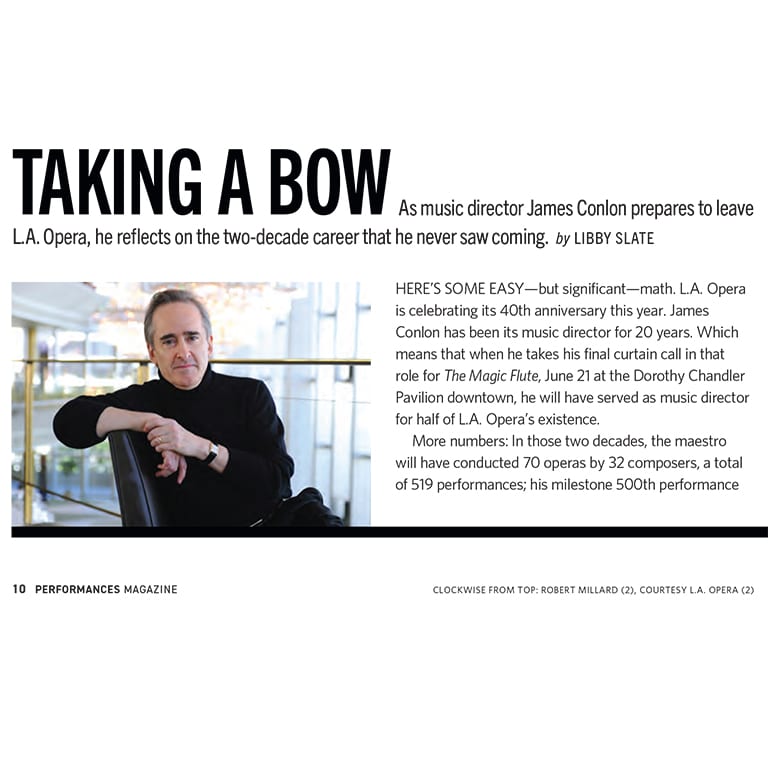
James Conlon - JAMES CONLON OPENS THE 2013 FESTIVAL DE SAINT-DENIS CONDUCTING TWO CONCERTS OF BERLIOZ’S L’ENFANCE DU CHRIST IN HONOR OF SIR COLIN DAVIS WHO WAS SCHEDULED TO CONDUCT THE WORK
Shuman Associates Inc - 05.13.13
James Conlon - Review: Powerful reading of Mozart Requiem opens May Fest
Cincinnati.com - 05.12.13
James Conlon - Review: May Festival reaches heavenly heights with 'War Requiem'
Cincinnati.com - 05.12.13
Shai Wosner - Pianist Shai Wosner finds Schubert’s dark side
The Washington Post - 05.10.13
Jon Kimura Parker - Jon Kimura Parker Takes on Mussorgsky, Rachmaninoff, Prokofiev & Stravinsky
The SunBreak - 05.10.13
Alexandre Tharaud - OPUS 3 ARTISTS SIGNS ALEXANDRE THARAUD
- 05.09.13
Sir Andrew Davis - Review: Philharmonia Orchestra, St David’s Hall, Cardiff
Wales Online - 05.09.13
Sir Andrew Davis - Philharmonia Orchestra, St David's Hall
South Wales Argus
ARTIST NEWS
Gustavo Dudamel: Mozart man
11.20.09
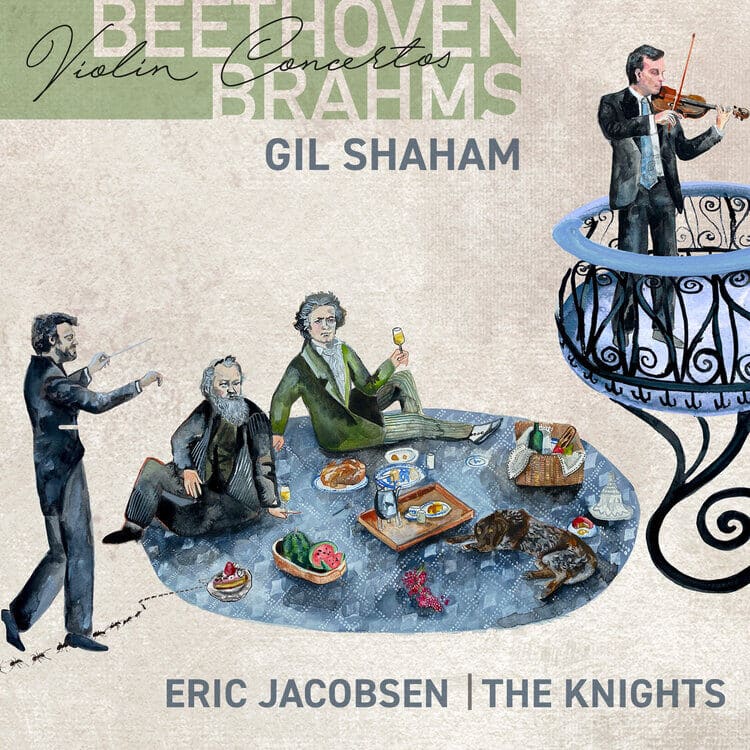
Gil Shaham
The Orange County Register
By Timothy Mangan
Gustavo Dudamel, who led his third program, and ninth concert, of the month with the Los Angeles Philharmonic, Thursday night at Walt Disney Concert Hall, is a traditionalist. A meat and potatoes man. Well, at least some of the time. For all the fuss surrounding the new music director (“60 Minutes” is apparently preparing a third segment on him; they didn’t do one on his predecessor), he is in many ways a throwback to another era.
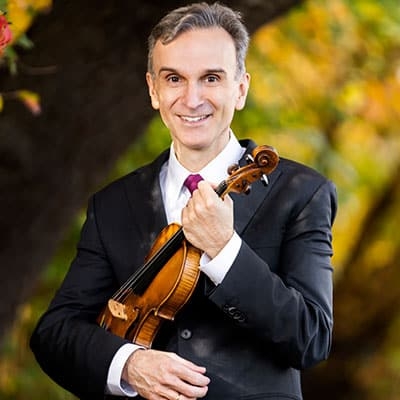
The program paired the music of Wolfgang Amadeus Mozart and Alban Berg, exemplars of the First and Second Viennese Schools, respectively. It was a good program, good to see Mozart given the place of honor he deserves. Mozart’s Symphony No. 38, “Prague,” and Symphony No. 41, “Jupiter,” stood as bookends to the agenda. In between these twin peaks came Berg’s Violin Concerto, with Gil Shaham as soloist.
Dudamel’s Mozart is Old School (not a bad thing in this listener’s book). It ignores virtually everything we have learned about historical music practice in the last 50 years. It neither handles the music with kid gloves (holding it at a polite distance) nor with an analytical scalpel (treating it as an example of ancient practices). It lives, it breathes, it sings. It is human. It is no nonsense.
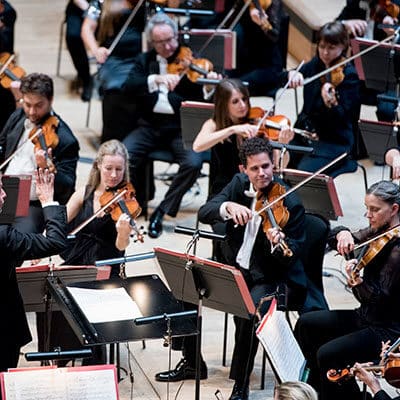
For one thing, Dudamel chose to use an (almost) full-sized orchestra, not the drastically reduced numbers so popular these days. (He had six double basses, placed straight behind the woodwinds, seven cellos and 13 first violins.) And he had the orchestra playing out fully, the strings digging in with full bows when appropriate, the woodwinds playing out nobly and lyrically, the brass and drums punctuating energetically.
His tempos were reasonable, judicious, for the most part, allowing the music space to make its points. There were two exceptions. The second movement of the “Prague,” marked Andante, was turned into a true slow movement, and with Dudamel also taking the repeats, it eventually sagged a little under the weight. The Menuetto of the “Jupiter,” marked Allegretto, was similarly slowed, its courtly manner becoming a kind of swaying and luxuriant waltz, certainly not ineffective but perhaps not altogether necessary.
But never mind, this was lovely Mozart. It had personality. The phrases were sentences, shaped lovingly and inflected meaningfully, but always with an eye toward the horizon, the full paragraph. Mozart’s conversational style came through abidingly. Dudamel coaxed particularly fine work from the Philharmonic’s strings, who played with warm and supple tone and unfailing expressiveness. The fugues and fugal sections of these works (and there are many) were taken with vigor and point.
If Dudamel’s emphasis at this early stage seems more on expression than precision (evidence was heard Thursday in the sometimes messy fast notes that came directly following long notes) that’s not such a bad thing. The playing communicates. The zest with which these players tore into the “Jupiter” finale alone was enough to fill most evenings.
Shaham, among the most talented of his generation’s violinists (he’s 38), offered a thoughtful account of the Berg. The work is a strange hybrid, combining the twelve-tone practices of Schoenberg with tonal harmonies, a requiem for Alma Mahler’s daughter with a secret love letter to Berg’s mistress, quotes from folk song and Bach with Expressionist angst. One of its main themes is constructed from the open strings on the violin, played simply up then down.
It is essentially a Romantic work, though. Shaham’s take was more orderly than excessive, however. He never pushed his violin to uncomfortable extremes (perhaps he’s too good for that). He colored the line with judiciously doled amounts of vibrato and non-vibrato, deciphered convoluted lines, and seemed comfortable much of the time to simply join the orchestra as an equal among chamber musicians.
Dudamel and the orchestra supported subtly, with restraint. We’ve heard more intense climaxes in this work than produced here, more swooning emoting, more touching endings, but this Berg had clarity, sense and sensibility, which was rather refreshing, really.