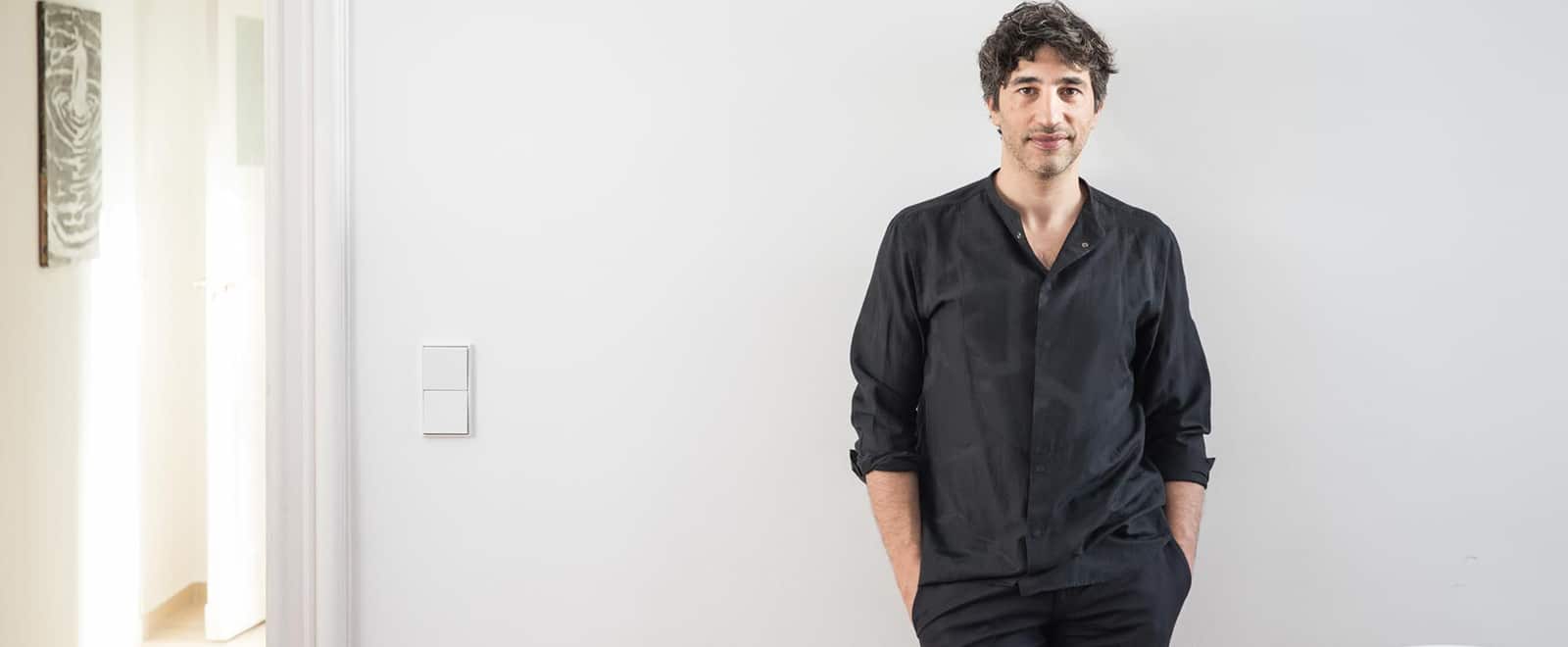
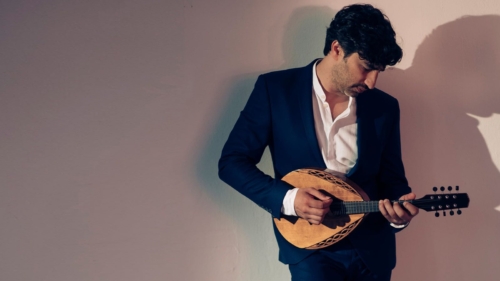
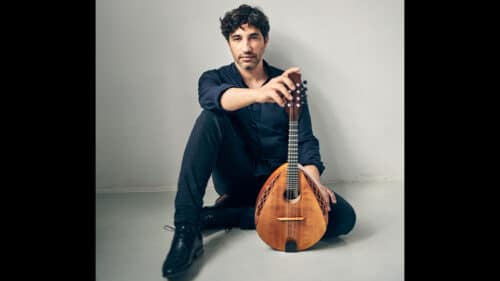
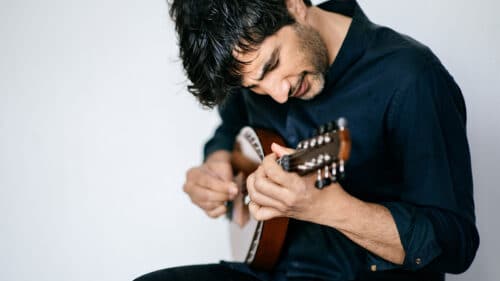
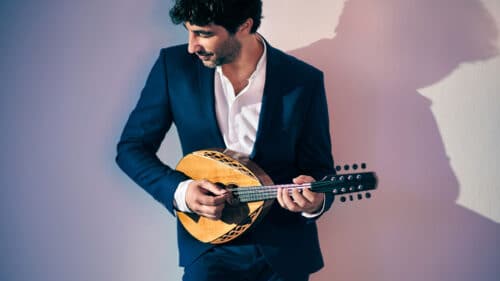
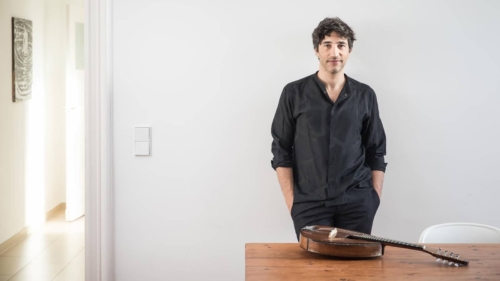
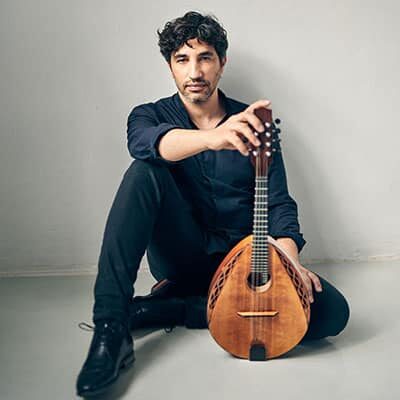
The first mandolin soloist to be nominated for a classical Grammy, Avi Avital has been compared to Andrés Segovia for his championing of his instrument and to Jascha Heifetz for his incredible virtuosity. Passionate and “explosively charismatic” (New York Times) in live performance, he is the driving force behind the reinvigoration of the mandolin: for more than two decades he has reshaped the history and the future of his instrument, playing it in the most prestigious halls all over the world. In addition to that, Avi Avital has expanded the mandolin repertoire not only through transcriptions, but also by commissioning over 100 works for the mandolin, including concertos for mandolin and orchestra by Fazil Say, Jennifer Higdon, Anna Clyne, Avner Dorman and Giovanni Sollima.
Highlights of the 2026/27 season include Avital’s return to Carnegie Hall, play-directing Les Violons du Roy, and his multi-concert residency at London’s Wigmore Hall. Return engagements include performances with the Munich Philharmonic, Camerata Salzburg, Orchestra della Svizzera italiana, and Kammerorchester Basel, while debut performances include the Iceland Symphony Orchestra, Kammerorchester des Symphonieorchesters des Bayerischen Rundfunks, Wrocław Baroque Orchestra, Warsaw Philharmonic Chamber Orchestra, and the Taipei Symphony. In the US, Avital embarks on a tour with Les Violons du Roy, and makes his debut play-directing the St. Paul Chamber Orchestra.
Avital continues to tour with his ground-breaking ensemble “Between Worlds”, exploring different genres, cultures and musical worlds. The ensemble launched with a three-part residency at Boulez Saal in Berlin and has since toured to major cities all over Europe, including Bucharest, Frankfurt, Warsaw, Hamburg, Gstaad, and Antwerp, as well as to festivals such as the BBC Proms, Schleswig-Holstein and Enescu. Upcoming performances include an extensive tour of North America.
Avi Avital’s other recent engagements include the Chicago Symphony, Los Angeles Philharmonic, Deutsches Symphonie-Orchester Berlin, Deutsche Kammerphilharmonie Bremen, Il Giardino Armonico, Academy of St Martin in the Fields, Ensemble Resonanz, Yomiuri Nippon Symphony, Orchestra dell’Accademia Nazionale di Santa Cecilia, Mozarteum Orchestra Salzburg, Tonhalle Orchester Zürich, Orchestra Sinfonica Nazionale della RAI, Orchestre National de Lyon, Israel Philharmonic, and the Norwegian Radio Orchestra, working with conductors such as Zubin Mehta, Kent Nagano, Alan Gilbert, Robert Spano, Osmo Vänskä, Yutaka Sado, Nicholas McGegan, Omer Meir Wellber, Giovanni Antonini, Jonathan Cohen and Ton Koopman.
Avi Avital’s versatility has led to features as “Portrait Artist” at Schleswig-Holstein Musik Festival, BOZAR Brussels, Dortmund Konzerthaus and as Artist-in-Residence at the Bodensee Festival and La Jolla Music Society California. He continues to appear at major festivals such as Salzburg, Hollywood Bowl, Tanglewood, Ravenna, MISA Shanghai, Cheltenham, Verbier, Lucerne, Bad Kissingen, Rheingau Musik Festival, Gstaad and Tsinandali.
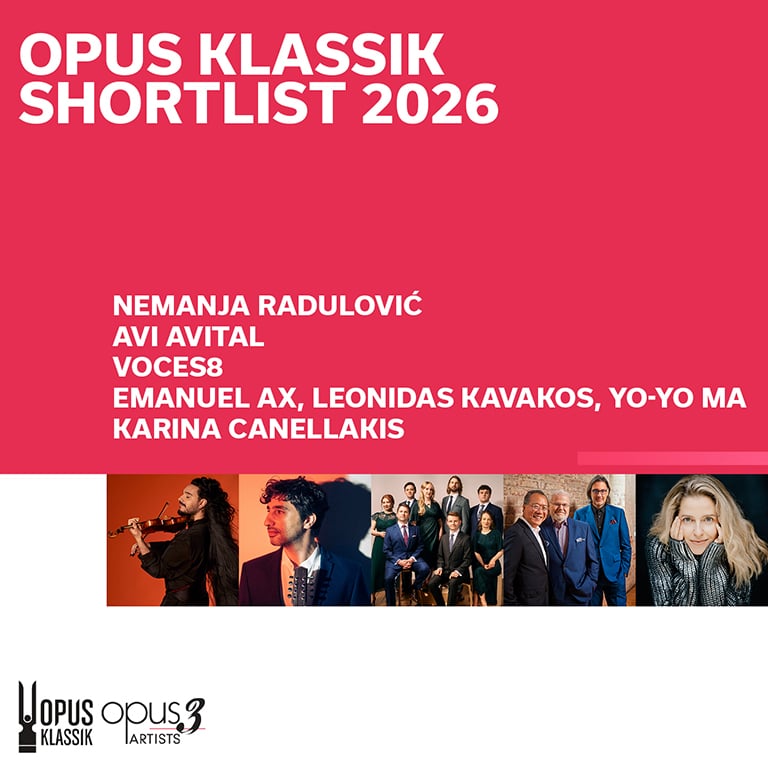
An exclusive Deutsche Grammophon artist, Avi Avital released his first album with his ensemble “Between Worlds” in 2025: “Song of the Birds” combines works by Manuel de Falla, Otar Taktakishvili and Fazil Say with traditional folk pieces in arrangements by David Bruce and others. “Concertos” (2023), which he recorded with Il Giardino Armonico and Giovanni Antonini, features mandolin concertos by Vivaldi, Hummel, Bach, Barbella and Paisiello. This album won an Opus Klassik award in 2024 for “Concerto Recording of the Year”. His album “The Art of the Mandolin” (2020) has received critical acclaim from The Times, The Independent, Gramophone, BBC Music Magazine and the international press. Previous recordings “Bach” (2019), “Avital meets Avital” (2017), “Vivaldi” (2015), an album of Avital’s own transcriptions of Bach concertos (2012) and “Between Worlds” (2014) also received numerous awards.
Born in Be’er Sheva in southern Israel, Avital began learning the mandolin at the age of eight and soon joined the flourishing mandolin youth orchestra founded and directed by his charismatic teacher, Russian-born violinist Simcha Nathanson. He studied at the Jerusalem Music Academy and the Conservatorio Cesare Pollini in Padua with Ugo Orlandi. He plays on a mandolin made by Israeli luthier Arik Kerman.
2026-2027