
- 05.15.13
Denis Kozhukhin - Denis Kozhukhin Impresses in Prokofiev’s ‘War Sonatas’
Seen and Heard International - 05.15.13
Kuok-Wai Lio - KUOK-WAI LIO RECEIVES AVERY FISHER CAREER GRANT
Avery Fisher Artist Program - 05.14.13
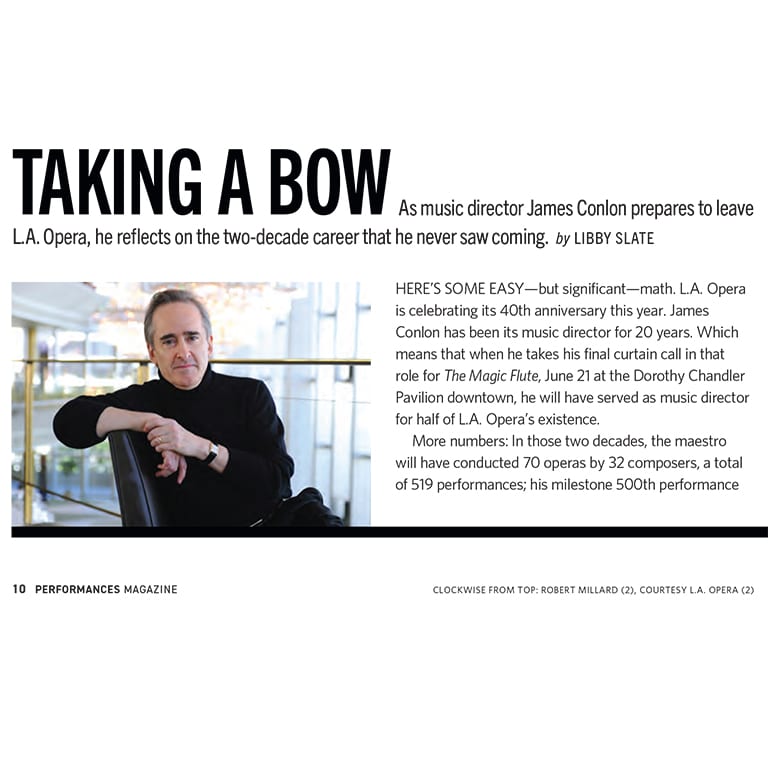
James Conlon - JAMES CONLON OPENS THE 2013 FESTIVAL DE SAINT-DENIS CONDUCTING TWO CONCERTS OF BERLIOZ’S L’ENFANCE DU CHRIST IN HONOR OF SIR COLIN DAVIS WHO WAS SCHEDULED TO CONDUCT THE WORK
Shuman Associates Inc - 05.13.13
James Conlon - Review: Powerful reading of Mozart Requiem opens May Fest
Cincinnati.com - 05.12.13
James Conlon - Review: May Festival reaches heavenly heights with 'War Requiem'
Cincinnati.com - 05.12.13
Shai Wosner - Pianist Shai Wosner finds Schubert’s dark side
The Washington Post - 05.10.13
Jon Kimura Parker - Jon Kimura Parker Takes on Mussorgsky, Rachmaninoff, Prokofiev & Stravinsky
The SunBreak - 05.10.13
Alexandre Tharaud - OPUS 3 ARTISTS SIGNS ALEXANDRE THARAUD
- 05.09.13
Sir Andrew Davis - Review: Philharmonia Orchestra, St David’s Hall, Cardiff
Wales Online - 05.09.13
Sir Andrew Davis - Philharmonia Orchestra, St David's Hall
South Wales Argus
ARTIST NEWS
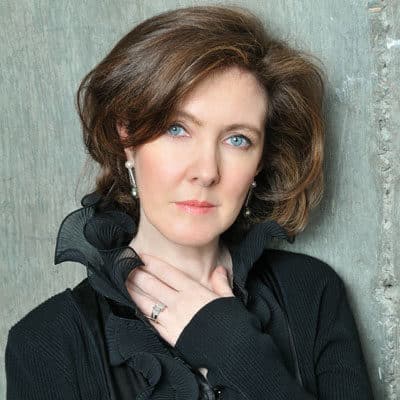
Gramophone talks to Anne-Marie McDermott
09.02.08
Anne-Marie McDermott
Gramophone
Absolutely. For a couple of years in my late teens I studied jazz – but I wasn’t successful at it. The great joy in playing this repertoire is that it’s all written out but it makes you feel like you’re playing jazz, yet you’re not forced to improvise.
How helpful was that jazz experience?
It’s a fine line with Gershwin – how much you try and make it more jazzy and how straight you play it. Yet there’s so much life and vitality and fun through the writing that I also enjoy delving into that. The writing really is so original. No one else sounds like Gershwin. He was a genius at his own voice.
How would you describe his influences?
He was influenced by so many elements. I’ve read that for the Rhapsody in Blue he got his ideas when he was sitting on a train and listening to the sounds of the train tracks. For An American in Paris he was so influenced by the sounds of the city. And that’s what makes his writing so exciting and alive – his ears really were on fire, listening to everything around him, to the cityscape around him.
Very few composers straddled the popular and classical divide like Gershwin.
Yes and something that draws me close to Gershwin is that one of his great dreams in life was to be accepted in the classical world. I don’t think he really got that in his lifetime. The Rhapsody in Blue was received incredibly well and performed very often, but when you read the reviews of the piece, there’s still a conflict – is this jazz or is this serious repertoire?
Does Gershwin help you reach out to new classical music audiences?
Absolutely! His repertoire can be a great ambassador for people who are a little skeptical about coming to a classical concert. We thought it would be a great thing if people buy this disc for the Rhapsody in Blue and then be drawn into the Second Rhapsody. It’s a brilliantly constructed piece, very captivating and gripping.
Orchestral Reviews: Editor’s Choice
BY JEREMY NICHOLAS
Gershwin
Complete Music for Piano and Orchestra: Rhapsody in Blue. Second Rhapsody. ‘I Got Rhythm’ Variations. Concerto in F.
Anne-Marie McDermott
Dallas Symphony Orchestra/Justin Brown
I feared the worst having seen the soloist’s photograph in the booklet before listening to the disc. The photogenic Ms. McDermott is pictured standing beside a grand piano clutching her pet dog. A cute little creature, to be sure, but an image that says “cruise ship pianist.” How wrong I was.
It’s rare enough to have all four Gershwin works for piano and orchestra on a single disc but rarer still for each one to come near or top of the class. First, and unusually enough, McDermott and her (British) conductor do Gershwin the courtesy of playing all the scores uncut and observing his dynamics and performance instructions to the letter. Typical of their meticulous attention to detail is the first bar of the code (allegro con brio) in the Concerto’s first movement, almost always played forte but marked (and rendered here) piano by the orchestra, mp by the soloist, allowing a crescendo over the following eight bars. A small point maybe, but it is what the composer asked for and is all the more effective.
Such preparation would mean little, though, if the performances did not fly off the page with verve and confidence, rhythmic precision and real style. The slow movement of the Concerto in particular is wonderfully characterized, all smokey blues with decadent solos from the muted first trumpet. The Dallas strings lend a Hollywood swoon to the big tunes in the famous Rhapsody and the Concerto while the remaining two pieces are more coherent and convincing than in the hands of some far more famous names. Strongly recommended.